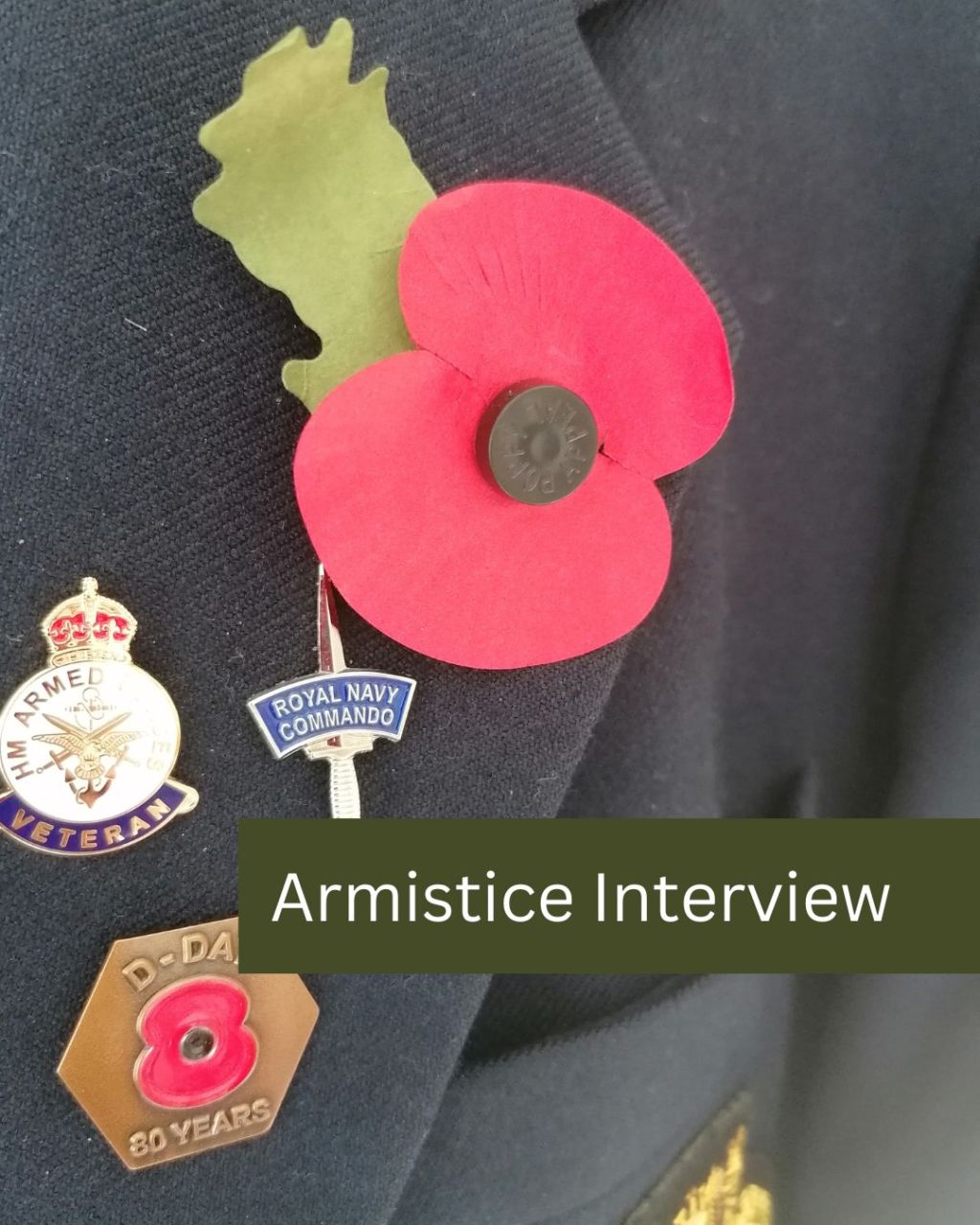
On Armistice Day, BBC Radio Devon spoke with three North Devon veterans – Roy, Clive and Phil from the Root Cause Project
Their stories, shared with openness and humour, reveal something often unspoken: that life after military service can feel unexpectedly disorienting. Even when the decision to leave is voluntary, the transition into civilian life can leave people feeling disconnected and unsure of their place in the world.
Losing and Rebuilding a Sense of Purpose
Roy, a former Royal Navy Commando medic, spoke candidly about the struggle:
“I felt very disjointed for quite a few years… I set up Root Cause for myself as well, because I needed a sense of purpose.”
That drive the routine, the shared mission, the brotherhood is something many veterans describe as a kind of “internal wiring”. Without it, the days can feel shapeless.
Phil, a retired Commando Engineer, found this out when he attempted to retire again after leaving the service:
“I’m wired to get up, go to work, be proactive. Semi-retirement didn’t work for me.”
What he needed wasn’t more free time — it was people. Community. Structure. Familiarity.
Green Prescribing: Therapy Without Feeling Like Therapy
Root Cause’s woodland setting is a deliberate choice. Roy explained that nature itself does a lot of the heavy lifting:
“If you strip away the walls and create the perfect setting — nature provides that — conversation becomes natural.”
Root Cause uses what they call green prescribing: simple outdoor activities, space to breathe, and time around a fire. There’s no pressure to talk. There’s no “session structure”. You can pick up a knife and whittle, brew a tea, help with woodland management, or just sit quietly by the flames.
The magic lies in the simplicity. When your hands are occupied, your mind can finally settle.
Clive describes it perfectly:
“Sitting around a fire, sharing stories… it put my life’s jigsaw back together again.”
Recreating Brotherhood Outside the Military
All three veterans talked about the deep human need for belonging — something the armed forces provides in abundance. Civilian life rarely replicates it.
Root Cause creates a space where veterans can feel understood without explanation. No need to translate experiences. No need to hide the struggles of transition.
Phil put it plainly:
“One thing I’ve realised is I need people. My service life was about people — and Root Cause is too.”
Remembering — Not Just Today, but Every Day
Because the interview aired on Armistice Day, the veterans were asked about its significance.
Clive’s response was especially moving:
“I don’t need a particular day to think of people who are no longer with us. In my mindset, it’s every day.”
Armistice Day serves as a collective pause — a moment in an otherwise frantic world to be still, to remember, to honour. But for veterans, remembrance is woven into their lives year-round.
More Than Bushcraft: A Gateway to Support
While Root Cause centres on outdoor activities, it goes deeper.
The team acts as a signpost to other organisations and wellbeing services — a much-needed guide through what many find to be a confusing landscape of available support. They help veterans navigate that “minefield”, connecting them with the right agencies when needed.
Looking Ahead
Root Cause continues to grow its offering, from woodland sessions to tough physical challenges that reignite camaraderie and shared purpose. With big plans for 2026, the team is focused on expanding their reach while keeping their original mission at the heart of the project: connection, purpose, and the healing power of nature.
On a day dedicated to remembrance, their message is clear: no one should have to navigate life after service alone.
Connection saves lives — sometimes around a campfire with nothing more than a cup of tea.
Listen to the interview here
 The Root Cause Project CIC